.png)
How to Restore Oxidized Gelcoat: Choosing the Right Correction Path for Your Boat
Table of Contents
This guide breaks down how to assess oxidized gelcoat and choose the correct level of intervention based on surface condition and desired outcome.

If your boat keeps losing gloss, fading faster than it should, or no longer responds to polishing the way it once did, the issue is usually deeper than the product being used.
In many cases, the real problem is the condition of the gelcoat — and whether the chosen correction path actually matches the outcome the owner is trying to achieve.
That distinction matters more than most people realize.
Not every oxidized boat needs the same level of work. Some surfaces can be improved through a lighter correction path.
Others have deteriorated to the point that polishing alone will not produce a stable result.
The mistake is treating all oxidation as the same.
That is where boat owners often begin spending money without fully improving the surface's condition.
And over time, that is what pulls many boats deeper into the restoration trap.
What Oxidized Gelcoat Actually Looks Like

Oxidation usually does not start with severe chalking or complete gloss failure.
It often begins subtly.
The finish may look slightly flatter than it used to. The color may seem less rich. The surface may still clean up, but not fully.
In some cases, the boat looks noticeably better when it is wet than it does when it is dry.
As oxidation progresses, the signs become easier to recognize.
Common signs of oxidized gelcoat include:
dull or faded appearance
loss of depth in the finish
chalky residue on the surface
rough or dry-feeling texture
gloss that fades quickly after polishing
This is where many owners get misled.
Because the boat may still look “decent” from a distance, it is easy to assume it just needs another polish or another coat of protection.
But once oxidation begins to develop in the gelcoat, the surface may already be moving into a corrective conversation — even if the boat has not yet reached a full restoration state.
That is why recognizing the signs early matters.
The earlier the condition is understood, the more control the owner usually has over the path forward.
Why Boats Oxidize in the First Place
Boats live in conditions that are hard on exterior surfaces.
They sit outside. They absorb UV exposure. They are exposed to water, airborne contamination, mineral deposits, and environmental fallout.
Unlike vehicles that may spend much of their time protected in a garage, many boats stay exposed for long periods without any real interruption in that cycle.
Over time, that exposure begins to break down the surface.
This is what oxidation is.
The gelcoat gradually loses clarity, depth, and reflectivity as the outer layer deteriorates.
Once that process starts, the finish no longer behaves the way a healthy surface should.
That is why oxidation is rarely resolved by a single product.
It is not just a lack of wax.
It is surface deterioration.
And if that deterioration is not addressed properly, the boat may continue to lose gloss no matter how many times it is polished or detailed.
This is also why two boats of the same size can need completely different correction paths.
The deciding factor is not just the boat itself.
It is the actual condition of the gelcoat.
Not Every Boat Owner Is Buying the Same Outcome
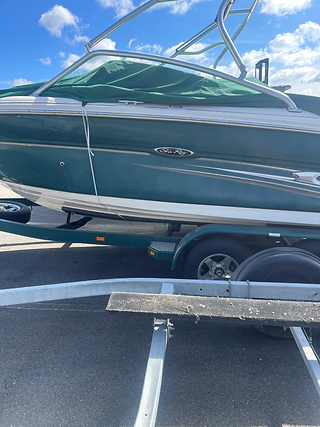

This Sea Ray receives light correction seasonally, but the same fading and chalking pattern continues returning.
One of the biggest mistakes in marine surface work is assuming every owner wants the same thing.
They do not.
Some owners want the boat properly corrected because their priority is restoring clarity, improving condition, and stabilizing the surface for the long term.
Others are looking for a more limited outcome.
They may want the boat to look better for the season. They may be preparing it for sale. They may be working within a tighter budget. Or they may simply want an improvement now without stepping into a full restoration-level investment.
Neither goal is automatically wrong.
The problem starts when those two outcomes get confused.
A seasonal improvement path is not the same thing as a restorative one.
One is designed to improve presentation.
The other is designed to materially change the condition of the surface.
That distinction needs to be clear from the beginning.
Because once a temporary outcome is mistaken for a restorative one, expectations start to break down.
The owner believes the problem was solved.
Then the gloss fades again.
And now the boat is back in the same cycle — except more money has been spent, more correction has been performed, and the surface may be further along than it was before.
That is why the first question should not simply be, “How much does it cost to polish it?”
The better question is:
What outcome am I actually trying to buy?
When a Limited Oxidation Reduction Path May Make Sense
Not every boat owner is in a position to fully restore the surface the moment oxidation becomes visible.
In some situations, a more limited correction path may still make sense.
If the goal is to improve overall appearance for the season, prepare the boat for sale, or take a more conservative step because of budget limitations, a lighter oxidation-reduction approach can be economically reasonable.
But that decision has to be made in the proper context.
It should be understood as a limited-outcome path — not confused with full restoration.
That matters because limited correction may improve gloss and presentation without fully resolving the deeper deterioration in the gelcoat.
In the right situation, that may be an acceptable tradeoff.
But it should still be treated as a tradeoff.
If the owner understands that the finish may not hold the same way long term, and that some oxidation may reappear sooner than it would under a more complete correction path, then the decision is at least being made clearly.
That is very different from believing the boat was fully restored when it was not.
This is also where many owners unknowingly start moving toward the restoration trap.
The boat is improved temporarily.
The oxidation returns.
Another round of correction is performed later.
And over time, the surface may keep cycling through short-term improvement without ever being fully stabilized.
That is why the goal matters.
Because the right correction path is not just about what can be done.
It is about which outcome is being selected — and whether that outcome is chosen with a full understanding of the trade-off.
When a Boat Needs More Than Oxidation Removal

There comes a point where a boat is no longer a candidate for simple oxidation removal alone.
This is usually the stage where owners say things like:
“It was polished before, but the shine did not last.”
“It looked better for a little while, then went dull again.”
“We have already had it detailed, but it keeps coming back.”
“The hull still looks faded even after work was done.”
That pattern matters.
Once a surface reaches that point, the issue is often no longer just light oxidation at the surface. The gelcoat may already be deteriorated enough that a lighter polishing approach will only create temporary improvement.
This is where oxidation removal becomes a restoration conversation.
That does not automatically mean every boat needs the most aggressive corrective process possible.
It does mean the surface may need more than a seasonal improvement pass if the goal is to actually change the condition of the finish.
Signs that a boat may need more than light oxidation removal include:
gloss that fades quickly after polishing
rough or dry-feeling gelcoat
heavy dullness or chalking
Repeated history of temporary improvement
darker hull colors revealing oxidation clearly
areas of uneven clarity or visible inconsistency across the surface
At this stage, the mistake is assuming another light correction will solve a condition problem.
Sometimes it will improve how the boat looks for a period of time.
But if the owner’s actual goal is to restore the finish more meaningfully and slow the cycle from repeating, the process usually needs to be framed differently.
That is the difference between simply improving appearance and selecting a correction path intended to stabilize the surface more responsibly.
Gelcoat Restoration vs Oxidation Removal: What the Difference Actually Is
These terms often get used interchangeably.
They should not be.
Oxidation removal can refer to a lighter corrective process used to restore clarity to a surface that has begun to lose it. In earlier stages, that may be enough to bring the finish back to a much better state.
Gelcoat restoration is broader.
It refers to a more serious corrective process used when the gelcoat has deteriorated beyond what a simple polishing approach can realistically stabilize.
That distinction is important because the outcome is different.
A lighter oxidation-reduction service may improve gloss and presentation.
A restoration-level process is intended to change the condition of the surface, not just improve its appearance.
That is why the question is not simply whether the boat can be made to shine.
Most boats can be made to look better.
The real question is whether the surface is being temporarily improved or corrected in a way that more meaningfully addresses the existing oxidation.
This is where owners often get misled.
If both outcomes are described the same way, the buyer has no real way to understand what is being selected.
Everything gets called “buffing,” “polishing,” or “restoration,” even though the actual intent and result may be very different.
One path is a presentation improvement.
The other is a condition-based correction strategy.
Those should never be confused with each other.
Every Time You Compound or Sand, You Are Removing Gelcoat


Abrasive correction removes material, which is why process decisions must be tied to condition and outcome.
Abrasive correction removes material from the surface.
That is how correction works.
Compounding, aggressive polishing, and sanding remove oxidation, reduce defects, and improve clarity by cutting into the outer layer of the gelcoat.
But gelcoat is not unlimited.
There is only so much material there to work with.
That is why a good technician is not simply chasing shine.
The job is to improve the surface responsibly while protecting the gelcoat's long-term life and health.
This is also why short-term correction decisions matter.
If a boat is repeatedly compounded season after season for temporary improvement, it may feel like the economical choice in the moment.
But over time, repeated abrasive correction without a real strategy can contribute to the same restoration trap many owners are trying to avoid.
The boat improves.
The oxidation returns.
The surface is corrected again.
More gelcoat is removed.
And the cycle continues.
That does not mean correction is bad.
It means correction should be intentional.
For us, the goal is not just to make the boat look better today. The goal is to make surface decisions that respect the finite life of the gelcoat and match the outcome the owner is actually trying to achieve.
Because abrasive correction removes material, repeated compounding, aggressive polishing, or unnecessary sanding over time can contribute to pigment loss, thinning of the gelcoat, and eventually burn-through when the surface is handled improperly.
The Real Question Is Not “Should You Sand?”
The conversation about sanding is often framed too simply.
The real issue is not whether sanding is good or bad in the abstract.
The real questions are:
What condition is the gelcoat actually in?
What outcome is the owner trying to achieve?
What level of material removal is justified?
Is the boat being corrected once properly, or repeatedly abraded through short-term fixes?
Sometimes sanding is necessary.
Sometimes it is not.
Sometimes, compounding is enough to meaningfully improve the surface.
Other times, compounding alone only produces another temporary cycle of shine followed by a quick decline.
That is why the better conversation is not “Should this boat be sanded?”
It is: What does the condition of this gelcoat call for, and what path makes the most sense based on the owner’s actual goal?
That is a professional conversation.
Because responsible correction is not about forcing every boat into the same process.
It is about matching the level of intervention to the condition of the surface and the selected result.
That is what protects both the finish and the owner from making the wrong investment.
How Boat Owners Get Pulled Into the Restoration Trap
Most boat owners do not set out to make the wrong decision.
In many cases, they are simply trying to make the most reasonable decision based on the information they have at the time.
The boat looks dull.
A polish is recommended.
The shine comes back.
The owner assumes the problem has been handled.
Then the gloss fades again.
At that point, another round of correction is performed. Sometimes it is a quick compound. Sometimes it is a seasonal polish. Sometimes it is sold as restoration even though the outcome is still limited.
This is how the cycle starts.
The boat improves temporarily, but the surface never becomes truly stable.
And because the result was better for a period of time, it is easy to believe that repeating the same service again later is the logical move.
But over time, the pattern becomes expensive.
More money gets spent.
More abrasive correction gets performed.
More gelcoat is removed.
And the owner is still dealing with the same underlying issue.
It is not only about oxidation returning.
It is about owners repeatedly paying for temporary improvement while gradually moving the surface deeper into a long-term correction problem.
Some boat owners do not end up paying for correction repeatedly because the previous work was necessarily done incorrectly.
In some cases, they end up in that cycle because a temporary-outcome path was chosen while a lasting result was still expected.
That distinction matters.
A lighter correction path may improve gloss and presentation for a period of time, but it is not the same thing as a restoration-level process intended to stabilize the condition of the surface more completely.
When those two outcomes get confused, the previous work often gets blamed when the gloss fades again — even though the real issue is that the boat was never corrected to the level the owner was ultimately expecting.
That is one of the ways owners get pulled deeper into the restoration trap: repeating a lower-level correction path while still hoping for a longer-term result.
To be clear, this is not a criticism of every marine detailing company or every technician in the field.
There are professionals in this industry doing excellent work — operators who understand surface condition, respect the finite life of gelcoat, and take correction seriously.
The issue is not that skilled people do not exist.
The issue is that many boat owners are still being given unclear expectations around outcome, longevity, and the difference between temporary improvement and true restoration-level correction.
That lack of clarity is one of the main reasons the same problems keep repeating.
This is also why clear communication matters so much.
If a seasonal improvement path is chosen knowingly, that is one thing.
But if a limited-outcome service is mistaken for a full restorative one, expectations quickly break down.
The owner thinks the issue was corrected.
The surface says otherwise.
And now the boat is back in the same cycle again.
That is exactly why condition-based evaluation and clear outcome framing matter so much from the beginning.
Because once oxidation starts returning and the boat keeps being corrected without ever being fully stabilized, the surface often ends up costing more over time than it would have if the condition had been addressed clearly from the start.
If your boat has been through this cycle before and you’re trying to avoid repeating it, the next step is to get the surface properly evaluated.
How MBG Determines the Right Correction Path
The first question is not price.
The first question is condition.
Before deciding how a boat should be approached, the surface has to be understood in context.
That includes:
How long the gloss has been failing
Whether the boat has already been polished or corrected before
How the boat is stored
How severe the oxidation appears
Whether the owner wants seasonal improvement or long-term surface stability
Those details matter because they help determine whether the boat is a candidate for a lighter correction path or whether it has already moved into a more serious restoration conversation.
That is also why not every estimate should be framed the same way.
Two boats of similar size may need completely different recommendations depending on surface condition, storage history, and the owner’s actual goal.
Sometimes a lighter oxidation-reduction path is the right call.
Sometimes the surface needs a more serious corrective approach if the owner wants to stop chasing the same issue over and over.
And in either case, the recommendation should be tied to the outcome being selected.
That is the difference between simply selling a service and making a condition-based recommendation.
At MBG, the goal is not to push every boat into the most aggressive option possible.
The goal is to identify what the surface actually needs, explain the tradeoff clearly, and help the owner choose the path that makes the most sense for the boat, the budget, and the long-term health of the gelcoat.
That is how better decisions get made.
And that is how owners avoid spending money on the wrong type of correction for the condition they actually have.
The Best Outcome Is Not Just Shine — It’s Surface Stability
A boat can look better and still remain unstable.
That is the part many owners do not realize until the gloss begins fading again.
A successful correction path is not simply about creating shine for today. It is about improving the surface in a way that makes sense for the condition of the gelcoat and the outcome the owner is actually trying to buy.
Sometimes that means a lighter path is enough.
Sometimes it means the boat needs a more complete restoration strategy.
But in either case, the real goal should be clarity about what is being selected and why.
Because once the wrong service is repeated often enough, the boat does not just keep losing gloss.
It keeps losing the opportunity to be managed more intentionally.
That is why the best outcome is not simply a glossy finish.
It is a surface that has been approached correctly, protected appropriately, and managed with enough discipline to avoid the same cycle moving forward.
That is what surface stability really means.
The Right Path Depends on the Condition of the Boat and the Outcome You Actually Want
Not every oxidized boat needs the same correction path.
Some surfaces can be improved through a lighter oxidation-reduction process.
Others need a more serious restoration approach if the goal is to meaningfully change the condition of the gelcoat.
The mistake is assuming that every dull surface should be treated the same way.
That is where money gets wasted, expectations get distorted, and the same oxidation cycle keeps repeating.
The better approach is to start with the condition, define the outcome clearly, and choose the path intentionally.
If you are trying to decide whether your boat needs a lighter correction path or a more serious restoration, the first step is a thorough surface evaluation.
That is how you determine what the surface actually needs — and avoid paying for the wrong solution.

If you’re not sure what level of correction your boat actually needs, we can take a look and point you in the right direction.
Frequently Asked Questions
How do I know if my boat needs gelcoat restoration?
If the shine keeps fading quickly, the surface feels rough, or polishing no longer produces a stable result, the boat may need more than a light oxidation-removal service. A proper surface evaluation helps determine whether the gelcoat is still a candidate for a lighter correction path or whether it has moved into a restoration-level conversation.
Can oxidized gelcoat be restored without sanding?
Sometimes, yes. It depends on the condition of the surface. In earlier stages, oxidation may respond to a lighter correction process. In more severe cases, sanding may be required to remove the degraded gelcoat layer before the surface can be properly restored. The right question is not whether sanding is always good or bad. The right question is what the condition of the gelcoat actually calls for.
What is the difference between oxidation removal and gelcoat restoration?
Oxidation removal usually refers to a lighter correction process intended to improve a surface that has begun losing clarity. Gelcoat restoration is a broader corrective approach used when the deterioration has moved beyond what a simple polishing process can realistically stabilize. One may improve appearance. The other is intended to more meaningfully change the condition of the surface.
Why does oxidation keep coming back after polishing?
Because polishing can improve appearance without fully stabilizing the condition of the gelcoat. If the underlying deterioration is not fully addressed, or if the surface is not protected and preserved properly afterward, the gloss may fade again and the oxidation can return. That is one of the main ways boat owners get pulled into the restoration trap.
Can a limited correction path still make sense?
Yes — in the right situation. Some owners are looking for seasonal improvement, preparing the boat for sale, or working within a tighter budget. In those cases, a lighter correction path may be a reasonable option if the owner understands the tradeoff. The problem starts when a temporary improvement path is mistaken for a restorative one.
Is waxing enough to fix oxidized gelcoat?
No. Wax may improve appearance temporarily, but it does not remove oxidation from the gelcoat. If the surface is already deteriorating, wax alone will not correct the underlying condition. Protection only performs properly when it is being applied to a surface that has been prepared appropriately first.
What happens if oxidation is left alone too long?
As oxidation progresses, the gelcoat continues losing clarity, gloss, and surface integrity. What may begin as a lighter correction issue can eventually turn into a more labor-intensive restoration problem. That is why early evaluation matters. The sooner the condition is understood, the more control the owner usually has over the path forward.
How do you determine which correction path is right for the boat?
The right path depends on the actual condition of the gelcoat, how long the gloss has been failing, how the boat has been stored, whether prior work has already been done, and what outcome the owner is trying to achieve. Not every boat needs the same level of correction, which is why the first step is evaluating the condition rather than assuming all oxidation should be approached the same way.
What is the goal after the boat has been corrected?
The goal is not just shine. The goal is surface stability. Once the surface has been corrected appropriately, it should be protected and maintained in a way that reduces the chances of falling back into the same cycle of oxidation and repeated correction.


